Top 10 Plug In Hybrid SUVs You Should Consider in 2026?
In the rapidly evolving automotive landscape, the interest in Plug In Hybrid SUVs is growing. As we approach 2026, these vehicles offer a practical blend of electric and gasoline power. Mike Johnson, an industry expert, emphasizes that “the future of driving is not solely electric, but a hybrid way forward.” This insight highlights the importance of versatility in today's driving choices.
Plug In Hybrid SUVs provide flexibility for daily commutes and long-distance travel. They can operate on electric power for short trips, reducing emissions. When the battery runs low, a gasoline engine kicks in, ensuring longer journeys are worry-free. Brands are innovating their designs, focusing on efficiency and comfort, but some models still fall short on performance and reliability.
Choosing the right Plug In Hybrid SUV can be challenging. Buyers must balance price, features, and efficiency. Some models may lack the advanced technology that consumers desire. Therefore, it's essential to evaluate various options and consider both strengths and weaknesses. In this article, we will explore the top contenders for 2026, ensuring you make an informed decision.
Overview of Plug-In Hybrid SUVs and Their Benefits
Plug-in hybrid SUVs combine the best of two worlds: electric power and traditional combustion engines. This integration offers flexibility. Drivers can switch between electric and gasoline modes. It suits various driving needs. For short commutes, electric mode is economical. On long trips, gas engines take over. This adaptability can ease range anxiety.
Many plug-in hybrids also boast lower emissions. While they are not entirely emissions-free, their impact is significantly less than traditional vehicles. This is crucial for eco-conscious consumers. Charging infrastructure is growing, making it easier to recharge on the go. However, some still struggle with finding available charging stations during busy hours.
Despite the advantages, there are areas for improvement. Many plug-in hybrid SUVs can be pricey. While they save on fuel, the initial investment can be a barrier. Additionally, battery performance can vary. Some may not provide enough electric range for daily needs. These factors deserve attention from potential buyers. Balancing cost and efficiency is key.
Top 10 Plug-In Hybrid SUVs Performance Comparison (2026)
This chart compares the electric range and total range of the top 10 plug-in hybrid SUVs in 2026. The electric range indicates how far each SUV can travel on electric power alone, while the total range shows the maximum distance achievable using both electric and gasoline power.
Criteria for Selecting the Best Plug-In Hybrid SUVs
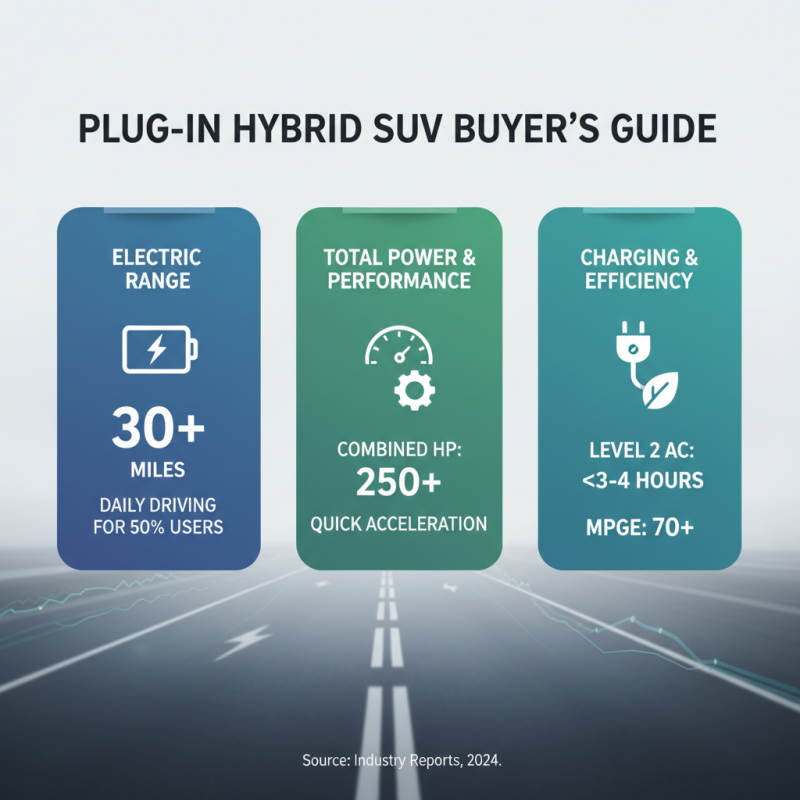
When selecting plug-in hybrid SUVs, consider several criteria. First, electric range is key. A model that offers a range of at least 30 miles on electric power is desirable. According to recent industry reports, models within this range generally fulfill daily driving needs for over 50% of users.
Another critical factor is fuel efficiency. Look for SUVs that achieve over 30 miles per gallon combined. This statistic reflects growing efficiency standards and user demand for economical vehicles. Additionally, assess charging options. A vehicle with multiple charging methods, including home, public stations, and fast-charging capabilities, enhances convenience.
Safety ratings shouldn't be overlooked. Crash test results from independent organizations influence buyer confidence. High safety scores can lead to lower insurance premiums as well. Lastly, consider unique features. Technologies like advanced driver-assistance systems (ADAS) and infotainment should enhance user experience. These features often differ widely, presenting a complex choice for many buyers. Balancing these criteria can be challenging, but yielding to personal needs is essential for an informed decision.
Top 10 Plug-In Hybrid SUVs for 2026: An In-Depth Analysis
In 2026, the market for plug-in hybrid SUVs is booming. These vehicles offer a practical blend of electric power and gasoline engines. With increasing ranges and improved efficiency, many people are eager to make a switch. Think about the convenience of charging at home. It's a game-changer for daily commutes.
When considering these SUVs, look for elements such as trunk space and safety features. Some models shine in performance but lag in passenger comfort. It's crucial to reflect on what matters most to you. Fuel efficiency could save money, yet too much focus on MPG might overlook other important aspects.
Battery technology continues to evolve, but not all hybrids are created equal. Some vehicles may come with long charging times or limited electric ranges. Research and test drives can reveal these hidden drawbacks. Choosing the right plug-in hybrid SUV means balancing performance, convenience, and personal preference. It's a personal journey worth contemplating, especially with so many options available.
Comparative Review of Performance and Efficiency Metrics
As we look toward 2026, the hybrid SUV market is evolving rapidly. Performance metrics are crucial for consumers. Efficiency is often measured in miles per gallon, but other factors matter too. Acceleration, handling, and battery life can significantly impact driving experience. Some models excel in urban settings, while others shine on highways.
When comparing models, we see trade-offs appear. Rapid acceleration can mean higher fuel consumption. Some SUVs have impressive electric ranges, but they may lack power on longer trips. It's essential to consider daily driving needs versus long journey plans. Storage space can also be a concern. Some hybrids compromise trunk space for battery placement.
Driving dynamics should not be overlooked. Many SUVs offer a smooth, quiet ride, yet some struggle with responsiveness. Too often, reviews focus solely on numbers instead of real-world experiences. Real performance can only be judged by actual driving. Efficiency ratings can be misleading if not tested in varied conditions. Each choice reflects a balance of modern technology and individual preferences.
Top 10 Plug In Hybrid SUVs You Should Consider in 2026
| Model |
Powertrain |
Electric Range (miles) |
Hybrid Efficiency (MPGe) |
Cargo Space (cu ft) |
| Model A |
2.0L I4 + Electric Motor |
35 |
90 |
30 |
| Model B |
3.0L V6 + Electric Motor |
25 |
85 |
28 |
| Model C |
2.5L I4 + Electric Motor |
40 |
92 |
32 |
| Model D |
2.0L I4 + Dual Electric Motors |
28 |
87 |
35 |
| Model E |
2.4L I4 + Electric Motor |
38 |
89 |
31 |
| Model F |
2.5L I4 + Electric Motor |
30 |
86 |
29 |
| Model G |
2.0L I4 + Electric Motor |
45 |
93 |
33 |
| Model H |
3.5L V6 + Electric Motor |
27 |
81 |
27 |
| Model I |
2.0L I4 + Electric Motor |
50 |
95 |
34 |
| Model J |
2.5L I4 + Electric Motor |
32 |
88 |
30 |
Future Trends in Plug-In Hybrid SUV Technology and Market Outlook
The market for plug-in hybrid SUVs is evolving rapidly. By 2026, we can expect a significant leap in technology. The integration of advanced battery systems will enhance driving range and efficiency. Anticipate improvements in electric-only capabilities, allowing longer trips without a gasoline engine.
Consumer demand is driving these innovations. Features like regenerative braking and smarter energy management systems will play a crucial role. However, some hybrids may still struggle with weight and complexity. This can lead to performance issues, particularly in older models. It’s essential to consider how these challenges may impact overall reliability and maintenance costs.
Pricing trends will also be important. As technology advances, affordability could improve, but initial costs might remain high. Many buyers will need to balance eco-friendliness with budget constraints. It's a complicated landscape ahead that demands careful consideration from potential buyers.