Leave Your Message

7 Tips to Choose the Best 7 Seater Electric Car

Choosing a 7 Seater Electric Car is no longer a niche family decision. It is becoming a practical response to rising fuel costs, stricter emissions targets, and expanding electric vehicle choices. The International Energy Agency reported that global electric car sales exceeded 17 million in 2024, with roughly one in five new cars sold being electric. Yet a larger body does not automatically mean better family value.

Real-world evaluation requires more than reading the advertised range. A seven-seat model can lose noticeable driving distance when carrying six passengers, luggage, and roof equipment. Cold weather can reduce efficiency further. Range is not everything. Charging speed matters too. BloombergNEF reported that average lithium-ion battery pack prices fell to about $115 per kilowatt-hour in 2024, supporting more affordable electric models, but repair and replacement costs still deserve careful attention. The IEA also highlights charging access as a central factor in electric vehicle adoption.

This guide presents seven practical checks for selecting the right 7 Seater Electric Car. They cover usable interior space, third-row comfort, safety ratings, battery range, charging performance, warranty coverage, and total ownership cost. Look closely at the floor. Measure the luggage area behind the last row. Test the charging cable at home. Small details can change daily satisfaction. Some advertised advantages may feel less impressive in practice. That is worth admitting. A vehicle may offer impressive technology yet disappoint families with narrow seats, slow public charging, or limited cargo space. The best choice balances verified data with your actual routes, climate, passengers, and budget—not showroom excitement alone.
7 Tips to Choose the Best 7 Seater Electric Car

Define Your Family’s Seating, Space, and Driving Requirements

Choosing the best seven-seater electric car starts with your family’s real routine, not the largest number in a brochure.

Count daily passengers, including children, grandparents, and occasional guests. A family of five may still need seven usable seats for school runs or weekend trips.

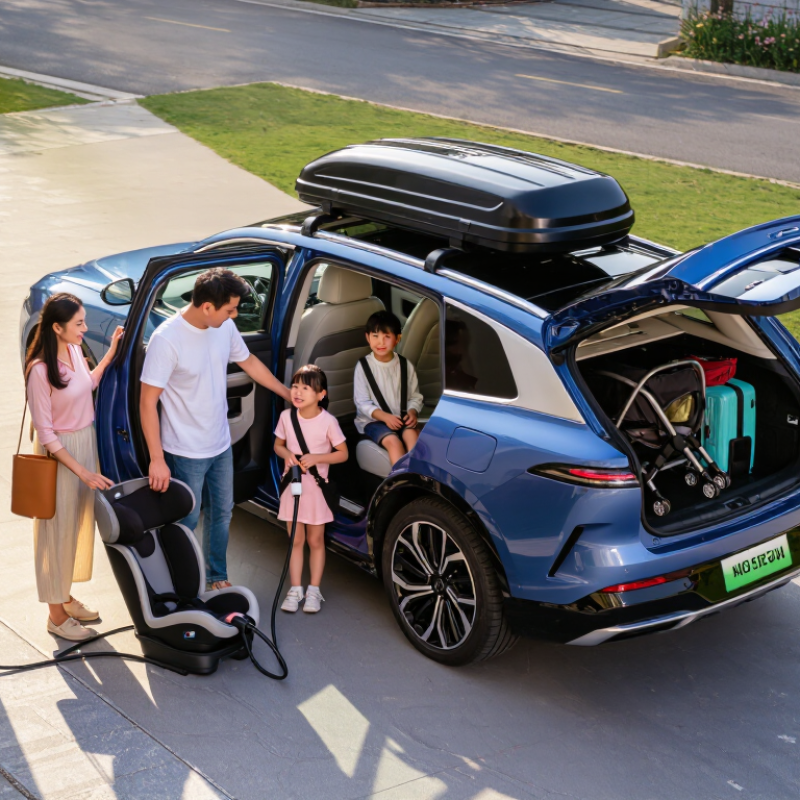
Measure the second- and third-row space carefully. Bring a child seat, a folded stroller, and one school bag to the showroom. Check whether adults can sit comfortably behind installed child restraints. Door openings, seat height, and third-row access matter more than glossy photographs. Try every seat.

Think about your normal driving distance. Record weekday mileage, highway trips, winter temperatures, and charging access at home. A long-range battery may be unnecessary for short commutes, but public charging can change the calculation. Ask about charging time, usable cargo space, and battery warranty terms from official documents.

Do not trust a quick walk-around.

A practical test drive should include tight parking, speed bumps, and a fully occupied cabin if possible. Listen for suspension noise and check rear visibility. I once focused too heavily on luggage volume and overlooked how difficult the third row was to fold. That mistake changed my checklist. Numbers help, but repeated family use reveals the truth. Your needs may also change within three years, so leave room for growing children, extra equipment, and less predictable journeys.

Compare Battery Range, Charging Speed, and Everyday Usability

7 Tips to Choose the Best 7 Seater Electric Car

Compare the tested battery range, not only the advertised figure. I have found that cold mornings, hills, luggage, and seven passengers reduce range noticeably. Leave a practical reserve for traffic and unexpected detours. Check independent test results when available. Laboratory figures are useful, but they do not perfectly represent family travel. If buying a used vehicle, request a recent battery health report.

Study charging speed beyond the highest headline number. A car may accept rapid charging briefly, then slow down as the battery fills. Ask how long it takes to charge from 10% to 80%. Also verify home charging performance, cable requirements, and connector compatibility. A slower household supply may be enough for overnight charging. It may not suit frequent long-distance trips. Plan charging stops around restrooms and meals, not just empty battery warnings.

Measure everyday usability in person. Test whether adults can reach the third row without awkward climbing. Check boot space with all seats occupied. Fold the rear seats and inspect the loading floor. Try child seats, shopping bags, and a folded stroller. I once focused too heavily on range and ignored the narrow rear access. That was a costly oversight. Take a real test drive with passengers if possible. Listen for cabin noise, examine visibility, and confirm that route planning includes reliable charging stations.neqarpoq

Evaluate Safety Ratings, Driver Assistance, and Passenger Comfort

7 Tips to Choose the Best 7 Seater Electric Car

Tip 1: Check independent crash-test ratings, not only sales descriptions. Compare adult, child, and pedestrian protection scores. Ratings can differ by region.

Tip 2: Inspect the safety equipment list. Look for multiple airbags, strong seat-belt systems, blind-spot warnings, and rear cross-traffic alerts.

Tip 3: Test the third row personally. I once found a spacious second row hiding cramped rear seats. Measure legroom with all seats occupied.

Tip 4: Evaluate driver assistance during a real test drive. Lane centering should feel steady, not nervous. Emergency braking must respond smoothly.

Tip 5: Learn the system’s limits. Cameras may struggle in heavy rain, glare, or poorly marked lanes. Assistance supports the driver; it does not replace attention. Read the manual carefully.

Tip 6: Check passenger comfort beyond seat padding. Open every door, test the climate controls, and examine ventilation for the rear rows. Small details matter.

Tip 7: Bring the family, child seats, and a few bags. See whether passengers can enter easily and still keep storage space. Comfort claims can disappoint in practice. I would also repeat the drive on rough roads, because a quiet showroom cannot reveal every vibration.

Review Performance, Interior Flexibility, and Essential Technology

A strong seven-seater electric car should feel calm, predictable, and capable under real family conditions. During a test drive, check acceleration with six or seven occupants, not just an empty cabin. Instant power is useful, but overly sharp responses can unsettle passengers. Pay attention to braking smoothness, steering weight, and body control on uneven roads. A practical range estimate should include cold weather, highway speed, and heavy luggage. Official figures are useful, but they are not the whole story.

Interior flexibility often matters more than impressive specifications. Test whether adults can reach the third row without awkward climbing. Slide the second-row seats forward and back, then fold each section separately. Look for a flat loading floor, low lifting height, and enough space for a stroller behind the final row. Small details count. Cup holders, charging points, and visible storage can prevent daily frustration. My own mistake was checking seat comfort before testing access with a child seat installed.

Essential technology should reduce effort, not create extra tasks. A clear driver display, dependable phone connection, and physical controls for climate functions are valuable. Check the parking cameras in dim light and test blind-spot warnings beside bicycles or narrow posts. Driver assistance should support attention, never replace it. Charging software must show realistic range, nearby compatible chargers, and remaining charge time. Some interfaces look advanced but respond slowly, so try them with cold hands and limited time. That practical test can reveal more than a glossy specification sheet.

Calculate Purchase Price, Running Costs, Warranty, and Reliability

7 Tips to Choose the Best 7 Seater Electric Car

Choosing a seven-seater electric car starts with arithmetic, not touchscreen appeal. List the drive-away price, home charger, registration, insurance, and financing interest. The International Energy Agency’s Global EV Outlook 2024 reports that battery pack prices fell 14% in 2023. That supports long-term value, but it does not make a large vehicle cheap. Compare the net purchase cost after incentives, not the advertised monthly payment.

For running costs, multiply usable energy consumption by annual distance and electricity tariff. A vehicle using 24 kWh per 100 km, driven 15,000 km yearly at $0.18 per kWh, uses about $648 in electricity. Add tires, public charging, insurance, and depreciation. Cold weather, hills, and six passengers can raise consumption sharply. Consumer Reports’ 2020 ownership analysis estimated $6,000–$10,000 in lifetime maintenance and repair savings for electric vehicles. Still, battery replacement risk deserves a reserve.

Read the battery warranty word for word. Across many markets, coverage commonly lasts eight years or 160,000 km, but capacity thresholds and exclusions vary. Reliability needs evidence beyond a smooth test drive. Consumer Reports’ 2024 survey found electric vehicles had 42% more reported problems than gas-only cars. That figure is not destiny. Ask about software faults, charging failures, parts delays, and local repair training. My spreadsheet would still be imperfect. I would favor transparent service data, practical warranty terms, and predictable charging costs.

7 Tips to Choose the Best 7-Seater Electric Car

Compare the estimated purchase price and five-year running costs before considering warranty coverage and reliability history.

Warranty benchmark

Many electric vehicles offer around 5–8 years of vehicle coverage, while battery coverage is commonly around 8 years or 100,000 miles.

Reliability check

Review independent owner surveys, recall records, repair frequency, charging-system issues, and the availability of local service support.

Calculation basis

UK benchmark estimate using 12,000 miles per year, home electricity at £0.28/kWh, and typical energy efficiency for each vehicle size.

Figures are anonymous market estimates in GBP and exclude finance interest, insurance, depreciation, tax, and resale value.