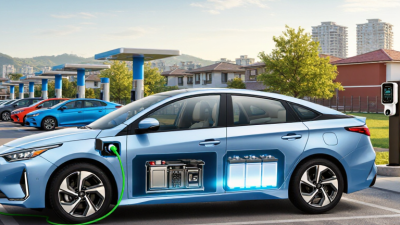
Choosing among Self Charging Hybrid Cars is not just a question of fuel economy. The right choice depends on your daily routes, passenger needs, budget, and access to servicing. These hybrids recharge their batteries through the engine and regenerative braking, rather than a wall outlet, as the U.S. Department of Energy’s Alternative Fuels Data Center explains. That distinction matters. A conventional hybrid can suit drivers who want electric assistance without planning charging stops.
There is useful context in the numbers. The U.S. Environmental Protection Agency’s 2024 Automotive Trends Report estimates that average real-world fuel economy for new light-duty vehicles reached 27.1 miles per gallon in model year 2023. That is a broad market average, not a promise about any specific hybrid. Your results can change with traffic, temperature, speed, and how often you make short trips. A fuel-cost estimate based on your own mileage is more useful than a headline figure.
The seven tips ahead focus on details you can check: real-world economy, cabin space, safety features, warranty coverage, service access, resale prospects, and test-drive comfort. Notice how the car behaves in stop-and-go traffic, where hybrid systems can operate differently than on a fast motorway. Check the boot with your usual bags, too. Small details matter. I would not treat any single review or rating as decisive; tests may use different routes and conditions. Compare official specifications with independent road tests, then choose the model that fits your actual routine—not an idealized one.
A self-charging hybrid uses a small battery, an electric motor, and a petrol engine to move the car. The battery is not usually plugged into a wall. Instead, it receives energy while you drive. During braking, the motor can work like a generator, converting some of the car’s motion into electricity. That energy flows back into the battery rather than becoming entirely wasted heat at the brakes.
It also gets help from the engine. Depending on the vehicle and driving conditions, the engine may turn a generator to produce electricity, or power the wheels directly. At low speeds, the electric motor can often move the car quietly for short stretches. When accelerating, the motor and engine may work together. The control system manages these changes without requiring the driver to choose a mode.
Watch the energy display. It may show power flowing into the battery as you slow for a red light, then flowing out when you pull away. The display is a simplified picture, though; it cannot show every loss in the system. “Self-charging” does not mean energy appears from nowhere. The car still uses fuel, and frequent highway driving may offer fewer braking opportunities than stop-and-go traffic. Cold weather and steep hills can also change how the system behaves.

Choose a self-charging hybrid around your actual routine, not an idealized one. A daily commute with repeated lights and slow traffic may let regenerative braking recover energy often. The car stores that energy in its battery and uses it to assist the engine. Short trips matter. On long, steady highway drives, the efficiency advantage may be smaller.
Track a typical week before comparing features. Note your commute length, traffic, hills, and how often you carry passengers or cargo. Frequent stop-and-go driving can make smooth, predictable acceleration especially useful. If your route includes steep roads, check how the car behaves climbing and braking downhill. During a test drive, listen for engine noise and notice whether acceleration feels natural. One short drive cannot represent every season or traffic pattern.
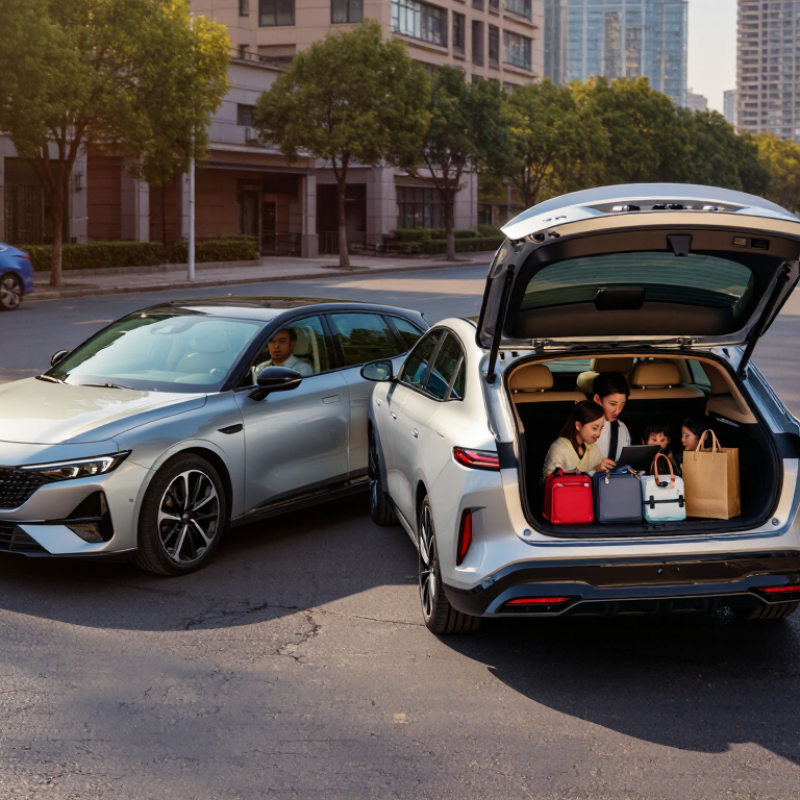
Match the cabin and safety equipment to your habits, too. A roomy rear seat may matter more than a large touchscreen if you regularly travel with family. If parking is tight, visibility and camera assistance deserve a close look. It is easy to focus on a fuel-economy estimate and overlook tire costs, comfort, or luggage space. Real-world mileage varies with temperature, speed, load, and driving style, so treat published figures as a guide, not a promise.
When comparing self-charging hybrids, treat fuel economy as a measured starting point, not a promise. The U.S. Environmental Protection Agency’s Automotive Trends Report 2024 puts average new-vehicle fuel economy at 27.1 miles per gallon for model year 2023. That is a useful broad benchmark, not a hybrid-specific target. Compare each car’s EPA combined rating, then consider your own routes: stop-and-go streets often suit hybrid systems, while steady highway driving can narrow the advantage. Cold mornings, hills, and heavy loads matter too.
Range depends on both fuel economy and tank capacity. Multiply the combined miles-per-gallon figure by the tank’s usable gallons for a rough estimate, then leave a buffer. Real trips rarely match a test cycle. That matters. A spreadsheet can look precise and still mislead. Check the EPA’s model-specific fuel-economy listing and compare its estimated annual fuel cost under the same assumptions.
Performance deserves a real drive, not just a specification-sheet glance. Notice how quickly the car responds when pulling away, joining a fast road, or climbing a hill. Regenerative braking can feel different from conventional braking, and engine noise may rise during hard acceleration. Try the same route in comparable traffic. A quick test drive is imperfect, but it reveals details that fuel-economy figures cannot.
| Tip | What to Compare | Useful Data or Check | Why It Matters |
|---|---|---|---|
| 1. Check fuel economy by vehicle class | Combined city/highway fuel consumption | As a broad guide, many compact full hybrids are rated around 45–55 mpg combined, midsize cars around 40–50 mpg, and hybrid SUVs around 35–45 mpg. Ratings vary by model, drivetrain, and test cycle. | Comparing vehicles in the same class makes the figures more meaningful. Check the official rating for the exact trim and wheel configuration. |
| 2. Match fuel economy to your driving | City, highway, and combined ratings | Full hybrids can recover energy during braking and may use the electric motor at low speeds. Highway fuel economy can be closer to, or sometimes lower than, city economy depending on the vehicle and conditions. | Frequent stop-and-go driving may favor a full hybrid; regular high-speed highway trips make the highway rating especially important. |
| 3. Estimate practical driving range | Fuel-tank capacity and real-world fuel economy | Estimated range = fuel economy × usable fuel. For example, 50 mpg × 11 gallons gives about 550 miles under those assumptions. Actual range changes with speed, weather, terrain, load, and driving style. | A self-charging hybrid does not need to be plugged in, but its total range still depends on its fuel tank and fuel consumption. |
| 4. Understand what “self-charging” means | Hybrid battery charging method and electric-only operation | A conventional full hybrid recharges its battery through regenerative braking and the engine. It is not designed to be plugged in, and electric-only travel is generally limited rather than a separately rated long-distance range. | This helps distinguish a conventional hybrid from a plug-in hybrid, which has a larger battery and is designed for external charging. |
| 5. Compare acceleration and power delivery | Engine and motor output, response, and independent acceleration tests | Hybrid electric motors can provide useful low-speed torque. There is no single acceleration figure that represents all hybrids; performance depends on vehicle size, system output, battery state, and transmission design. | A test drive can reveal how smoothly the engine and motor work together and whether acceleration suits merging and passing needs. |
| 6. Assess braking feel and energy recovery | Regenerative braking and transition to friction brakes | Regenerative braking converts some of the vehicle’s slowing energy into electrical energy stored in the battery. The amount recovered varies; it does not eliminate normal braking or guarantee a fixed fuel saving. | Brake-pedal smoothness and predictable stopping are important for everyday comfort and control. |
| 7. Compare ownership costs and usable space | Purchase price, warranty, cargo capacity, and maintenance schedule | Compare the same model year and trim. Check the battery and hybrid-system warranty that applies in your location, along with cargo volume and rear-seat space. | Fuel savings are only one part of total ownership cost; the right vehicle should also fit your passengers, luggage, budget, and local warranty terms. |
Figures are general comparison guides, not specifications for a particular vehicle. Use official fuel-economy ratings and manufacturer specifications for the exact vehicle being considered.
A self-charging hybrid uses its engine and regenerative braking to replenish its battery, but the battery can still lose capacity over time. It is tempting to judge durability by mileage alone. Climate, driving patterns, and service history matter too. Ask a qualified technician how battery health is checked, and request a written inspection report. A warning light is not a diagnosis.
Read the battery warranty carefully. Coverage periods, mileage limits, degradation thresholds, and exclusions vary by vehicle and region. Confirm what happens if capacity drops, whether the warranty transfers to a later owner, and which maintenance records are required. Get the answers in writing. “Covered” can mean less than you expect.
Maintenance is usually not complicated, but it should not be ignored. Check the owner’s manual for battery-cooling vents and service intervals; blocked vents can affect cooling. Keep up with routine checks of the brakes, tires, and 12-volt battery as well. On a test drive, note repeated engine starts, uneven acceleration, or dashboard warnings, then have concerns inspected rather than guessing. These clues are not proof of a battery fault.
A warranty is one useful part of assessing battery durability and long-term ownership costs.
How to read this chart: These are selected U.S. emissions-warranty benchmarks, not a universal hybrid-battery warranty comparison. Federal coverage of at least 8 years applies to specified major emissions-control components; California requires 10 years of coverage for traction batteries in qualifying zero-emission vehicles. Vehicle eligibility and warranty terms vary, so check the warranty booklet for the exact battery coverage, mileage limit, and capacity conditions.
Sources: U.S. EPA emission warranties · California vehicle and emissions warranty periods
Compare the purchase premium with likely fuel savings, not with an idealized lifetime estimate. The U.S. Department of Energy’s fueleconomy.gov calculator lets shoppers compare annual fuel costs using local fuel prices and expected mileage. For a simple illustration, driving 12,000 miles yearly at 40 mpg uses 300 gallons; at 30 mpg, it uses 400. At an assumed $3.50 per gallon, that difference is $350 annually. Real fuel prices and driving patterns can change the result. Not automatic.
Include financing, insurance, scheduled maintenance, and resale value in the calculation. AAA’s 2024 Your Driving Costs report estimated average new-vehicle ownership costs at $12,297 per year, based on 15,000 miles of annual driving. That figure covers multiple vehicle types, so it is a planning benchmark, not a hybrid-specific forecast. Ask for insurance quotes and compare maintenance schedules before buying. Also consider your routes: frequent stop-and-go driving may improve hybrid fuel economy, while long, steady highway trips can narrow the advantage. Estimates look tidy on paper. Cold mornings, short trips, and an unexpectedly high purchase premium can make the payback slower than expected. Check the numbers against your own commute and budget.