How to Choose the Best Fully Electric Car for You?
Choosing a fully electric car is a significant decision. These vehicles provide an eco-friendly alternative to traditional cars. Fully electric cars are becoming increasingly popular due to advancements in technology and charging infrastructure. However, the variety on the market can be overwhelming.
When selecting a fully electric car, consider your personal needs. Do you have a long commute? Check the vehicle's range. Do you want advanced technology? Look for models with updated features. Each car has unique benefits and potential drawbacks to explore.
Reflect on your lifestyle. Sometimes, a flashy model may not suit your daily routine. Efficient models may not always be the most exciting options. Finding the right balance requires careful thought and evaluation. Understanding your needs will lead you to a satisfying choice.
Understanding Fully Electric Cars: Key Differences from Traditional Vehicles
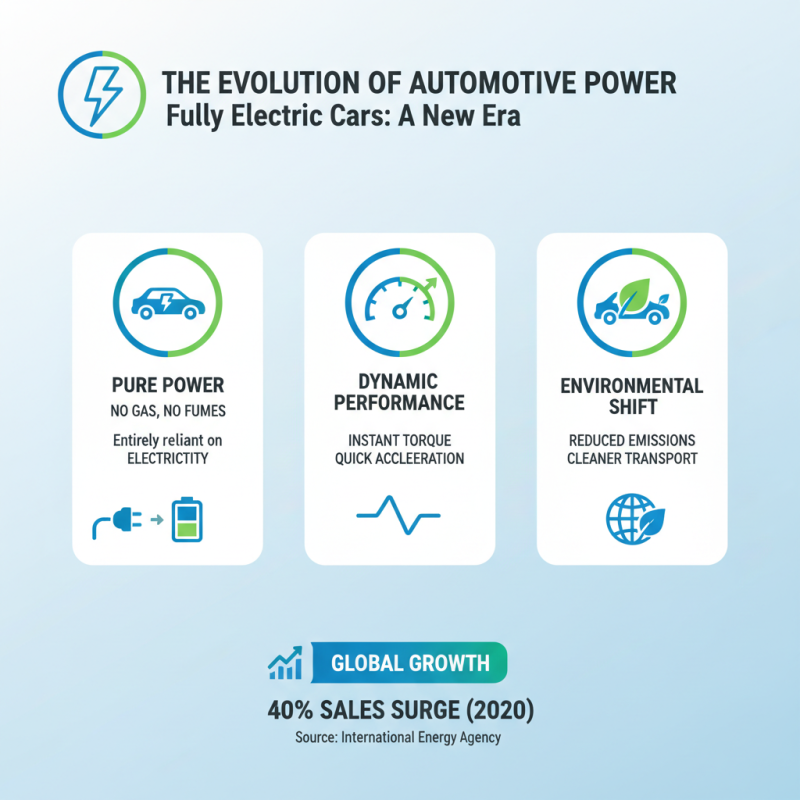
Fully electric cars represent a shift in how we understand vehicles. Unlike traditional internal combustion engines, they rely entirely on electric power, leading to different performance and environmental impacts. According to the International Energy Agency, electric vehicle sales surged by 40% in 2020, reflecting growing consumer interest.
Battery capacity is essential in electric cars. It dictates range, affecting daily usability. Many models offer between 150 to 300 miles per charge. Think about your daily driving needs. If you seldom exceed 50 miles, a lower range model may suffice. However, frequent long trips require a robust battery.
Charging infrastructure also matters. Public charging stations are increasing. Yet, they can be scarce in rural areas. Research shows that 75% of electric vehicle owners primarily charge at home. This reality prompts buyers to consider home charging options, like installing a Level 2 charger.
Tips: Assess your driving habits. Consider your local charging access. Be prepared for occasional charging challenges. Understanding these factors can help in making a wise choice. Electric vehicles are exciting, but awareness of their quirks is vital for full enjoyment.
Assessing Range: What Mileage is Ideal for Your Daily Driving Needs?
Assessing the ideal range for a fully electric car is crucial. A recent study shows that around 70% of daily commutes are under 30 miles. This means many drivers may not need a vehicle with an extensive range. However, planning occasional long trips might require a different consideration.
Experts recommend having at least 200 miles of range for a comfortable daily experience. This range covers most commutes and allows for additional freedom. Additionally, a report from the Electric Vehicle Association indicates that some drivers feel anxious about range limits. They report that range anxiety can influence purchasing decisions.
For those who drive longer distances, a model with a 300-mile range may be ideal. Such options could minimize stress during those extended journeys. However, this comes at a higher price and requires careful budget considerations. Remember, while more range seems better, it's vital to assess your actual needs. Real-world driving patterns often differ from expectations.
Evaluating Charging Options: Home vs. Public Infrastructure for Electric Cars
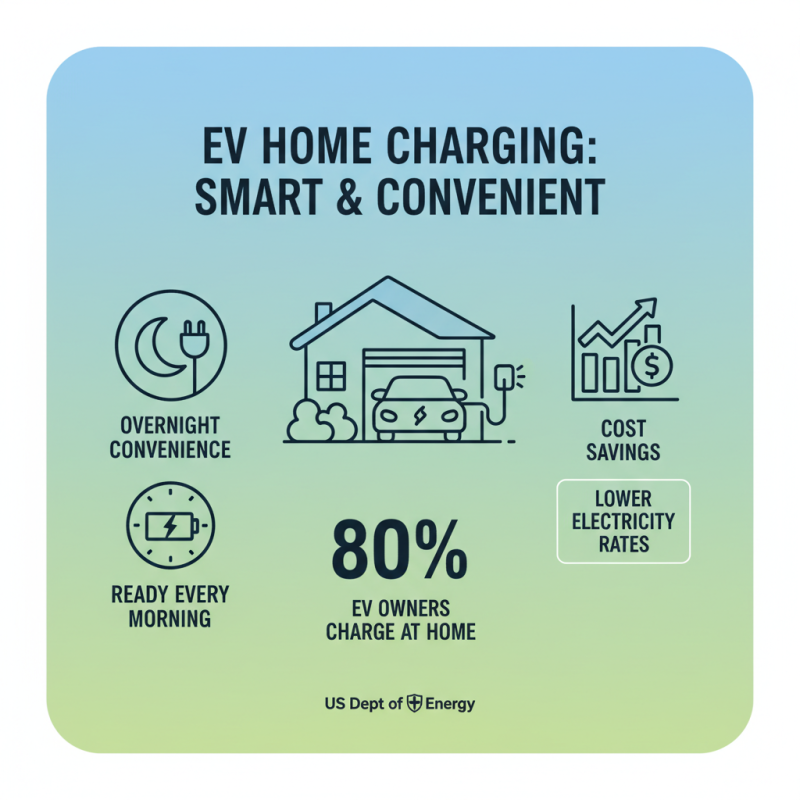
When choosing a fully electric car, evaluating charging options is crucial. Home charging is often the most convenient. It allows you to plug in overnight, ensuring that your vehicle is ready every morning. According to the U.S. Department of Energy, about 80% of electric vehicle owners rely on home charging. This practice can lead to significant cost savings, as home electricity rates are generally lower than public charging rates.
Public charging infrastructure is essential for longer trips. Access to fast chargers along highways can be a game changer. A recent study indicated that areas with more charging stations see a 30% increase in electric vehicle adoption. However, finding available chargers can be tricky. Sometimes, chargers may be out of service or occupied, leading to frustration.
Tips for choosing your charging option: consider your daily driving habits. If you drive less than 40 miles daily, home charging could suffice. Think about your travel patterns too. If you often go on long trips, you’ll need a reliable public charging network. Also, check the availability of chargers in your area. Don’t forget to have a backup plan; it’s always wise to know where multiple charging stations are located.
Cost Analysis: Total Ownership Expense of Electric Vehicles Compared to Gas
When considering electric vehicles, ownership costs are crucial. These include upfront purchases, charging, maintenance, and insurance. Many buyers wonder if the initial cost is worth it. Electric cars can be more expensive upfront, but they often save money over time due to lower fuel costs and fewer maintenance needs.
Charging expenses vary by location and home energy rates. Public charging may add to costs, depending on usage. On average, electricity is cheaper than gasoline. However, reliance on public chargers can be unpredictable. Some drivers face long waits at charging stations. This uncertainty can contribute to overall costs.
Maintenance is another area of concern. Electric vehicles require less frequent servicing. Yet, battery replacement can be costly. Buyers need to consider battery lifespan. Overall, calculating true costs is essential. Analyze your unique driving habits and local energy costs to make informed decisions.
Safety Features and Ratings: Evaluating Electric Car Performance in Crashes
When choosing a fully electric car, safety features and ratings are crucial. Look for models with high crash-test ratings. Many organizations evaluate cars, providing insights into their safety performance. These ratings can be the difference between a safe ride and a risky one.
Consider vehicles with advanced safety technologies. Features like automatic emergency braking and lane-keeping assistance help prevent accidents. However, they are not foolproof. Drivers should still stay alert. Remember that technology can fail; human awareness is essential.
Tips: Always check the latest safety ratings before making a decision. Look for redundancy in safety features. A backup system can enhance your protection. Ensure your vehicle has enough airbags for all occupants. Balancing safety and comfort should be a priority.
How to Choose the Best Fully Electric Car for You? - Safety Features and Ratings
| Model |
Safety Rating (out of 5) |
Crash Test Performance |
Advanced Safety Features |
Autonomous Driving Capability |
| Compact EV |
4.8 |
Excellent |
Automatic Emergency Braking, Lane Keeping Assist |
Level 2 |
| SUV EV |
4.5 |
Very Good |
Blind Spot Monitoring, Cross Traffic Alerts |
Level 2+ |
| Sedan EV |
5.0 |
Outstanding |
Adaptive Cruise Control, Traffic Jam Assist |
Level 3 |
| Luxury EV |
4.9 |
Excellent |
360-Degree Cameras, Parking Assist |
Level 3+ |