How to Choose the Best Battery Car for 2026?
As we approach 2026, selecting the best Battery Car becomes increasingly crucial for consumers. The shift toward electric vehicles is undeniable. According to a report by the International Energy Agency, sales of electric cars surged by over 50% in 2021. This trend is set to continue as technology advances, making Battery Cars more efficient and affordable.
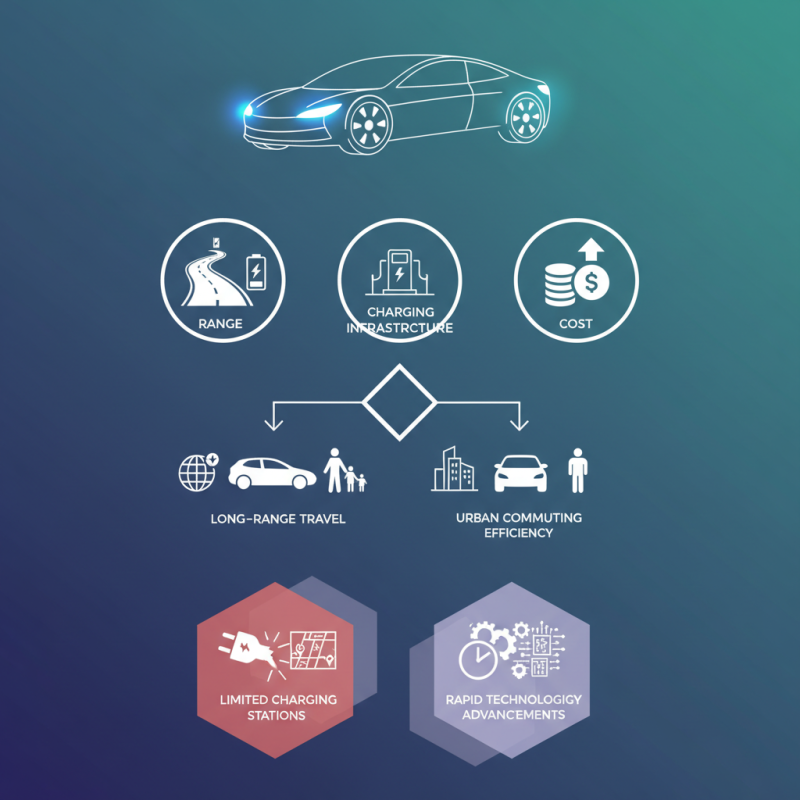
Industry expert Dr. Elena Torres states, "Choosing the right Battery Car requires understanding personal needs and market trends." Factors like range, charging infrastructure, and cost should play a pivotal role in decision-making. With various models emerging, it's essential to evaluate what fits your lifestyle best. Are you prioritizing long-range travel for family trips or urban commuting efficiency?
While Battery Cars promise clean energy, they are not without challenges. Limited charging stations can hinder convenience. The rapid pace of technological advancements may soon outdate current options. Reflecting on these aspects will help consumers make informed choices while adapting to a fast-evolving market.
Factors to Consider When Choosing a Battery Car for 2026
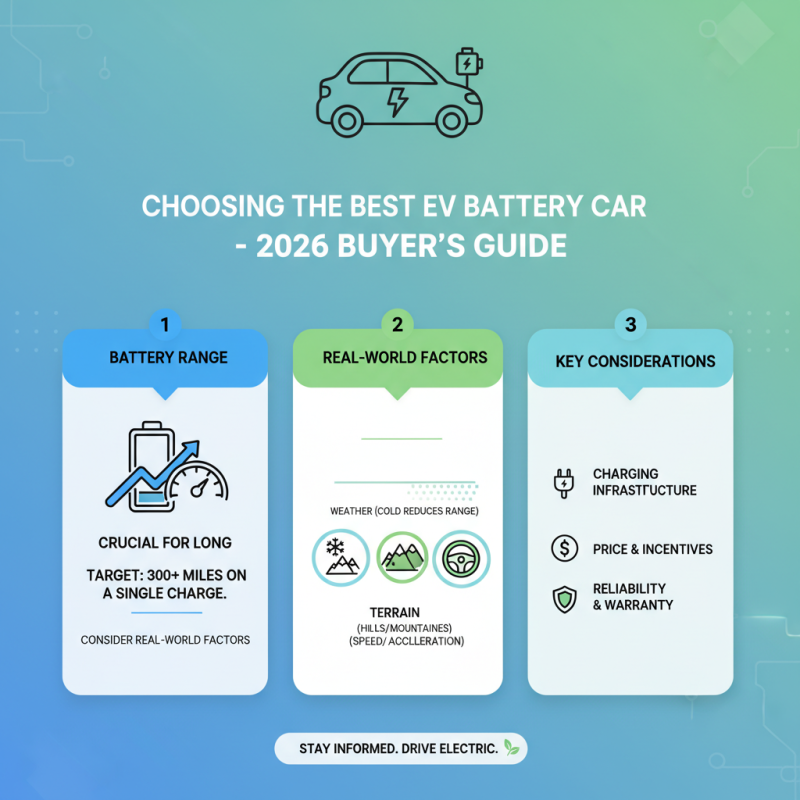
Choosing the best battery car for 2026 involves evaluating several key factors. First, battery range is crucial. A longer range allows for freedom on longer trips. Look for cars that offer at least 300 miles on a single charge. However, real-world conditions can affect this range. Weather, terrain, and driving habits all play a role.
Another important aspect is charging infrastructure. By 2026, the availability of fast charging stations will be vital. Check if there are enough stations in your area and along your frequently traveled routes. Compatibility with different charging networks is also important for convenience.
Lastly, consider the total cost of ownership. Battery technology improves rapidly, but initial purchase prices can be high. Calculate potential savings from fuel costs and maintenance. Be wary that factors like insurance and depreciation may vary. Reflect on your budget and needs. In 2026, making an informed decision means looking deeper than just the immediate features of the car.
Key Features to Look for in 2026 Electric Vehicles
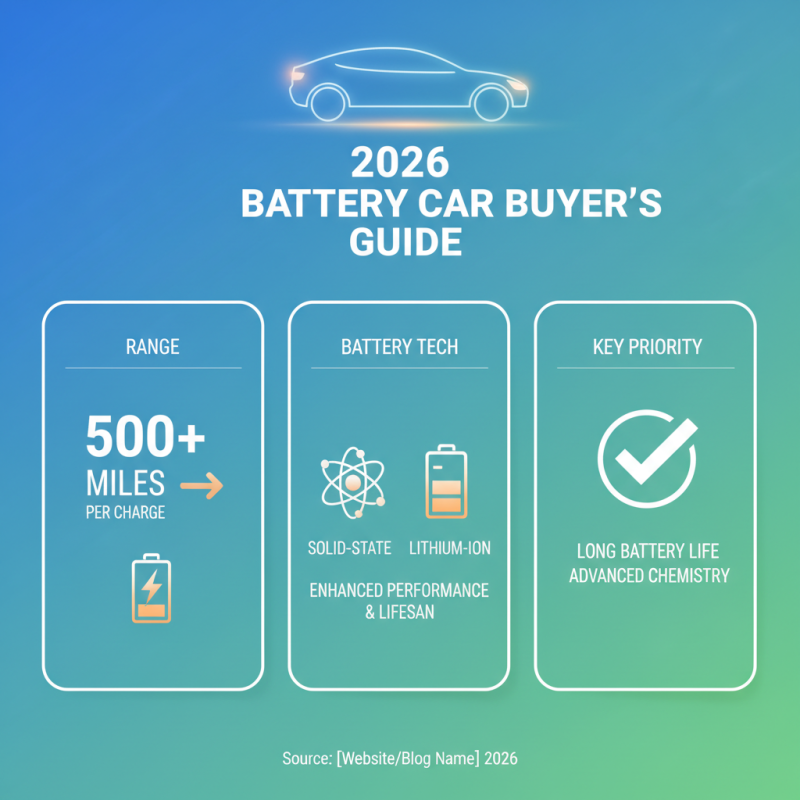
When choosing the best battery car for 2026, several key features should be a priority. Battery life remains crucial. The average electric vehicle (EV) ranges between 200 to 400 miles per charge today. By 2026, many manufacturers aim to achieve over 500 miles per charge. It’s essential to look for models with advanced battery technology. Look for lithium-ion or solid-state batteries. These can significantly enhance performance and lifespan.
Charging speed is another important factor. Current DC fast chargers can replenish up to 80% of an EV's battery in about 30 minutes. However, 2026 models should feature even faster charging capabilities, potentially under 15 minutes. This development will address range anxiety—an ongoing concern for potential EV buyers. Additionally, the availability of charging stations continues to grow, expected to surpass 1 million in the U.S. by 2026.
Safety features are non-negotiable. Over 70% of customers prioritize safety in their purchasing decisions. By 2026, look for new technologies like advanced driver-assistance systems (ADAS). These systems help prevent accidents but are still evolving. Improving them requires ongoing effort. Additionally, consumers should consider the overall sustainability of the manufacturing process. Companies should provide transparent information about the sourcing of materials and recycling initiatives. This transparency is increasingly important for eco-conscious buyers. It is vital to think critically about these factors when selecting an electric vehicle.
Assessing Battery Life and Charging Options in New Models
When choosing a battery car for 2026, battery life is a critical factor. Recent reports indicate that many new models will offer ranges of over 300 miles. This is a significant improvement. However, the real-world performance can vary greatly. Different driving conditions can shorten the expected range. It’s crucial to think about daily needs and habits.
Charging options also play a crucial role. Many manufacturers now provide ultra-fast charging capabilities, reducing downtime. Some models can achieve 80% charge in under 30 minutes. Despite this progress, charging infrastructure varies widely. Urban areas might have ample charging stations, while rural locations often lack sufficient options. A report showed that 30% of electric car owners experienced "range anxiety" due to limited charging access.
Ultimately, balancing battery life with charging convenience is essential. Consider your lifestyle. Will you often be on long trips? Or do you mostly drive locally? These factors can influence your choice. The landscape for battery cars is evolving quickly, but it still requires careful thought and research.
Understanding Government Incentives and Regulations for EVs
Government incentives play a crucial role in the adoption of electric vehicles (EVs). By 2026, countries worldwide are expected to implement various subsidies and tax breaks to encourage EV usage. For instance, a recent report from the International Energy Agency suggests that buyers may benefit from grants of up to $10,000 per vehicle in some regions. These incentives can substantially lower the cost of purchasing a battery car.
However, regulations will also evolve. Many governments are tightening emissions standards. The European Union aims for a 55% reduction in new car emissions by 2030. This pushes manufacturers to accelerate their changes. Consumers should prepare for stricter requirements on vehicle performance and sustainability. Understanding these details is vital for making informed decisions.
Potential buyers should also be aware of regional variations in incentives. What applies in one state or country might not be the same elsewhere. Some areas may offer cash rebates, while others might focus on tax credits. This creates confusion and necessitates thorough research. There’s also the concern about eligibility criteria. Some incentives could be exclusive to certain vehicle types, leaving buyers wishing for clearer regulations. Keeping track of changes will be essential as deadlines approach.
Electric Vehicle Battery Range Comparison (2026)
Comparing Leading Brands and Models of Battery Cars for 2026
When selecting the best battery car for 2026, it's essential to compare various key features across leading brands and models. Recent industry reports indicate that battery efficiency will be paramount, with the average electric vehicle (EV) range expected to exceed 300 miles. This range is driven by advancements in battery technology, including solid-state batteries, which promise faster charging and greater longevity.
Look for models that offer regenerative braking. This feature maximizes energy efficiency by capturing energy typically lost during braking. Data shows that some new models can recover up to 70% of energy expended during a drive. Pay attention to the charging infrastructure as well; with more public charging stations appearing, accessibility remains a crucial point for many buyers.
Tip: Always consider the warranty on the battery. A comprehensive warranty can provide peace of mind with regard to potential degradation over time. It can be a reflection of the manufacturer's confidence in their technology. Reflect on your driving habits, as these will influence your decision. Some people might not need ultra-fast charging if they mostly drive short distances.
How to Choose the Best Battery Car for 2026? - Comparing Leading Brands and Models of Battery Cars for 2026
| Model |
Battery Range (miles) |
Charging Time (hours) |
Horsepower |
Price ($) |
| Model A |
300 |
8 |
250 |
35,000 |
| Model B |
350 |
7 |
300 |
40,000 |
| Model C |
250 |
6 |
200 |
30,000 |
| Model D |
400 |
9 |
350 |
50,000 |
| Model E |
320 |
8.5 |
280 |
38,000 |