How to Choose the Best PHEV Cars in 2026?
As the automotive industry evolves, the interest in PHEV cars continues to grow. These vehicles offer a blend of electric power and traditional gasoline engines. By 2026, many options will be available. Choosing the right PHEV car can be challenging. Features, efficiency, and price all play significant roles in decision-making.
When considering a PHEV, think about your driving habits. How often do you drive long distances? Do you need a spacious interior for family travel? The answers to these questions will influence your choice. Many PHEV cars offer significant savings on fuel. Yet, some models may lack performance or reliability. Researching user reviews is crucial.
In the realm of PHEV cars, aesthetics matter too. A sleek design can enhance your driving experience. However, beauty can often be subjective. Balancing style and function is essential. Take your time to assess various models. It’s a decision that requires careful thought and consideration.
Understanding PHEV: Definitions and Key Features
Plug-in hybrid electric vehicles (PHEVs) combine traditional engines with electric ones. This dual approach offers versatility. A PHEV can operate solely on electricity or use gasoline. It’s essential to understand these features before making a choice in 2026.
PHEVs have specific key characteristics. They usually have a smaller battery compared to fully electric vehicles, which influences range. Although many drivers appreciate this, it can be a downside for others. The charging time and infrastructure are also crucial factors to consider. Availability of charging stations varies by location, making daily usage a challenge in some areas. Frequent users of electric mode might find themselves needing more options.
Another aspect to reflect on is fuel efficiency. PHEVs tend to be more efficient than traditional models, but real-world figures often disappoint. Drivers may face the reality of not maximizing their electric range. Understanding these features will guide potential buyers. Evaluate needs carefully, and consider various driving habits before deciding.
Market Trends for PHEV Cars in 2026
The market for Plug-in Hybrid Electric Vehicles (PHEVs) is evolving rapidly as consumers seek greener alternatives. By 2026, the global PHEV market is expected to grow by over 20%, driven by stricter emissions regulations and rising fuel prices. Industry reports indicate that hybrid models will represent a significant portion of the new car sales. This makes it essential for buyers to understand the changing landscape.
In 2026, battery technology is projected to improve significantly. This will enhance driving ranges, with many models expected to exceed 50 miles on electric power alone. However, it's not just about the numbers. Many consumers still express concerns regarding battery lifespan and replacement costs. This creates an opportunity for manufacturers to address these doubts directly.
Tip: When evaluating PHEVs, consider the warranty offered for battery systems. A longer warranty can provide peace of mind. Pay attention to user reviews as well. They can highlight real-world performance issues that data may overlook. Remember, the most advanced features aren’t always the best fit for everyone. Evaluate your daily needs and driving habits carefully.
Evaluating Performance and Efficiency in PHEV Models
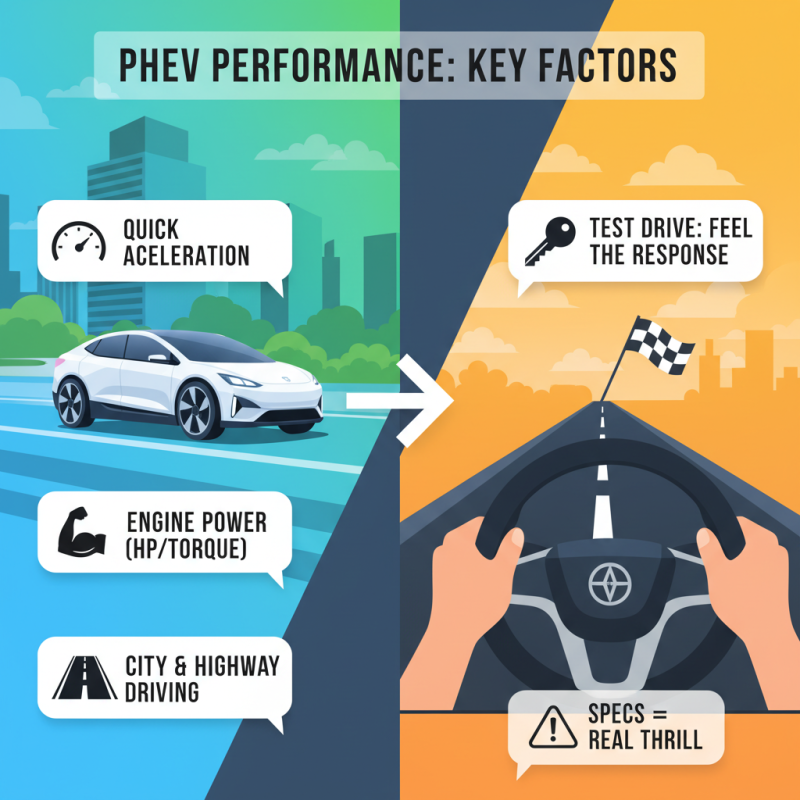
When choosing a plug-in hybrid electric vehicle (PHEV), performance is a key factor. Acceleration should be brisk, with enough power for city driving and highway merging. Check the horsepower and torque figures. A strong engine can make a significant difference. However, some models may not deliver the expected thrill despite their specs. It’s vital to test drive and feel the car's responsiveness.
Efficiency is equally important. Look at the electric-only range. Many PHEVs offer different mileages based on battery size. Some cars excel in urban environments, while others struggle. Regeneration features can also enhance efficiency, but they vary widely between models. This inconsistency can leave some drivers disappointed.
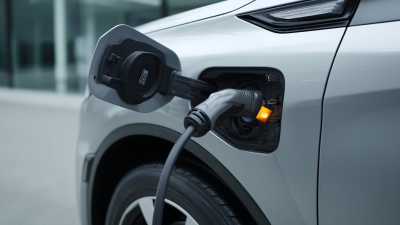
Pay attention to charging options. Home charging can be convenient, but not all PHEVs adapt to various home setups. Public charging stations are essential for long trips. The availability of these stations can affect your overall experience. Overall, understanding both performance and efficiency aspects will guide you in making a well-informed decision.
Comparing Price and Incentives for PHEV Purchases
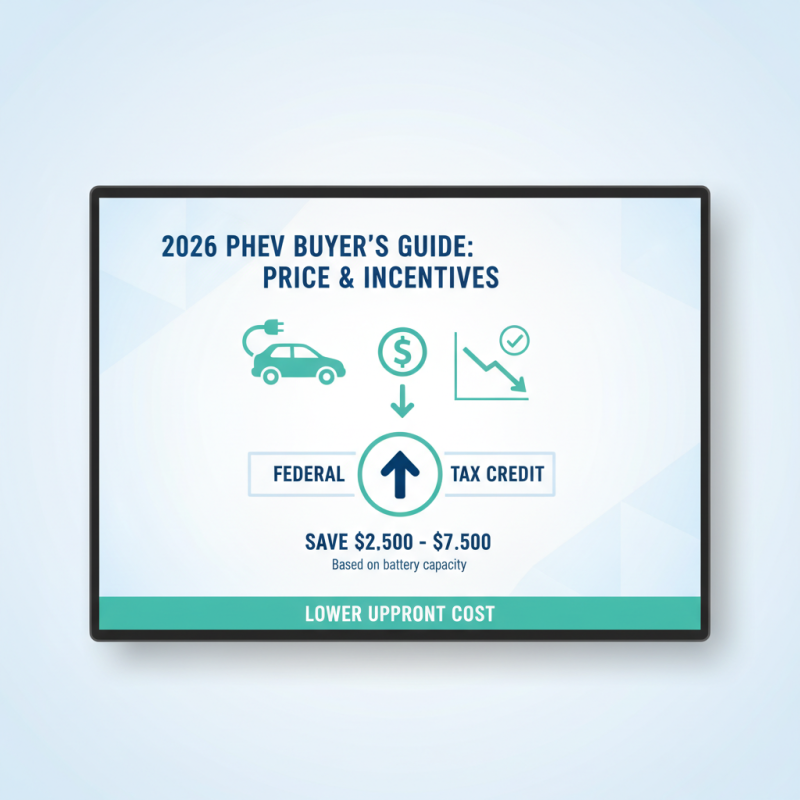
When considering PHEV (Plug-in Hybrid Electric Vehicle) purchases in 2026, price and incentives stand out. A recent industry report suggests that federal tax incentives for PHEVs may range from $2,500 to $7,500 per vehicle, depending on battery capacity. This financial benefit can significantly lower the upfront costs.
Many states also provide additional incentives. Some offer rebates that can cover up to 10% of the purchase price. These incentives vary widely and can depend on your location. Understand which state programs are available.
Tips: Always check your local regulations. PHEVs often qualify for carpool lane access, which can save you time.
While incentives are attractive, the actual price of a PHEV can still be daunting. The average price for new PHEVs is projected to be around $35,000 in 2026. This figure can fluctuate based on features and technology advancements. Be mindful of this when budgeting.
Tips: Consider total cost of ownership. Look beyond the sticker price to evaluate long-term savings on fuel and maintenance.
Assessing Safety Ratings and Reliability of PHEV Vehicles
When choosing the best Plug-in Hybrid Electric Vehicles (PHEVs) in 2026, safety ratings are vital. According to the Insurance Institute for Highway Safety (IIHS), vehicles with higher ratings tend to offer better crash protection. The IIHS reported that 80% of PHEVs reviewed in 2025 received "Good" ratings in major crash tests. This is significant. However, it's essential to note that ratings can vary from model to model, even within the same category.
Reliability also plays a crucial role. J.D. Power's 2025 U.S. Vehicle Dependability Study found that the average reliability score for PHEVs was around 75 out of 100. This indicates a growing trend in dependable hybrid technology. Yet, some owner reports show issues with battery life after three years. While many PHEVs perform well initially, long-term reliability remains a concern.
In addition, buyers should consider the warranty options available. A recent survey showed that 60% of consumers prioritize warranty length when selecting a PHEV. The most common coverage extended to eight years. This warranty often includes battery replacement, which can be expensive. Awareness of these factors ensures informed choices when evaluating PHEVs in 2026.
How to Choose the Best PHEV Cars in 2026? - Assessing Safety Ratings and Reliability of PHEV Vehicles
| Model |
Safety Rating |
Reliability Score |
Electric Range (miles) |
Fuel Efficiency (MPG) |
| Model A |
5 stars |
88/100 |
45 |
95 |
| Model B |
4.5 stars |
82/100 |
50 |
90 |
| Model C |
4 stars |
85/100 |
38 |
80 |
| Model D |
5 stars |
90/100 |
60 |
92 |